info@yako-hw.com
+86-13380989888
0750-3278683





Large developments rarely fail because of one dramatic mistake. More often, they lose time and margin through small specification gaps, delayed approvals, inconsistent finishes, or hardware that looks right on paper but performs poorly after installation. That is why door hardware sourcing for hotels, apartments, offices, hospitals, and mixed-use buildings needs a structured review from the start. As construction demand keeps expanding, procurement teams are under more pressure to secure reliable supply, technical consistency, and compliance at scale. Deloitte reported in 2025 that the global construction market is expected to grow from US$11.39 trillion in 2024 to US$16.11 trillion in 2030. In that environment, hardware selection becomes part of risk control, not just a buying task.
For large buildings, style matters, but performance matters first. A lever Handle, hinge, lock body, pull handle, stopper, or window accessory must match the traffic level, door type, climate exposure, and maintenance expectations of the building. High-frequency entrances, corridor doors, service doors, and wet-area doors do not need the same specification. The safest approach is to define usage zones before confirming finishes and models. This is also the foundation of how to source door hardware for construction projects without later rework.
A practical review should include base material, cycle durability, fire door compatibility, corrosion resistance, finish stability, and replacement logic. The Builders Hardware Manufacturers Association notes that ANSI accredited BHMA standards cover locks, closers, hinges, exit devices, and other builders’ hardware, which gives buyers a performance benchmark for commercial applications.
In large developments, compliance problems are expensive because they often appear late. Accessibility and fire safety should be checked before mass production begins. The U.S. Access Board states that door hardware must allow one-hand operation, must not require tight grasping, pinching, or twisting of the wrist, and should operate with a maximum force of 5 lbf. That is one reason lever handles are often preferred in public and commercial environments. NFPA explains that fire doors must be inspected after installation and then at least annually, so rated openings also need matching hardware that supports long-term compliance.
For procurement teams, this means hardware cannot be selected as isolated decorative pieces. It must work as part of a complete door set. A mismatch between latch, hinge, handle, closer, and door rating can slow approvals, create site variation, and increase replacement costs.
Price comparisons often focus on unit cost, but large-volume buying should focus on installed cost and service life. Stainless steel remains a preferred material for many project applications because of its corrosion resistance and strength. World Stainless explains that stainless steels contain at least 10.5 percent chromium, which supports their corrosion-resistant properties. In practice, that makes stainless steel a strong option for coastal buildings, humid climates, public washrooms, and other demanding environments where finish failure can damage the entire appearance of a property.
This is where Door And Window Hardware selection becomes a technical decision rather than a catalog decision. Buyers should confirm grade, finish process, application area, and cleaning conditions before placing a bulk order. A polished look in a showroom is not enough. The key question is whether the hardware can still look stable after repeated use, cleaning, and exposure.
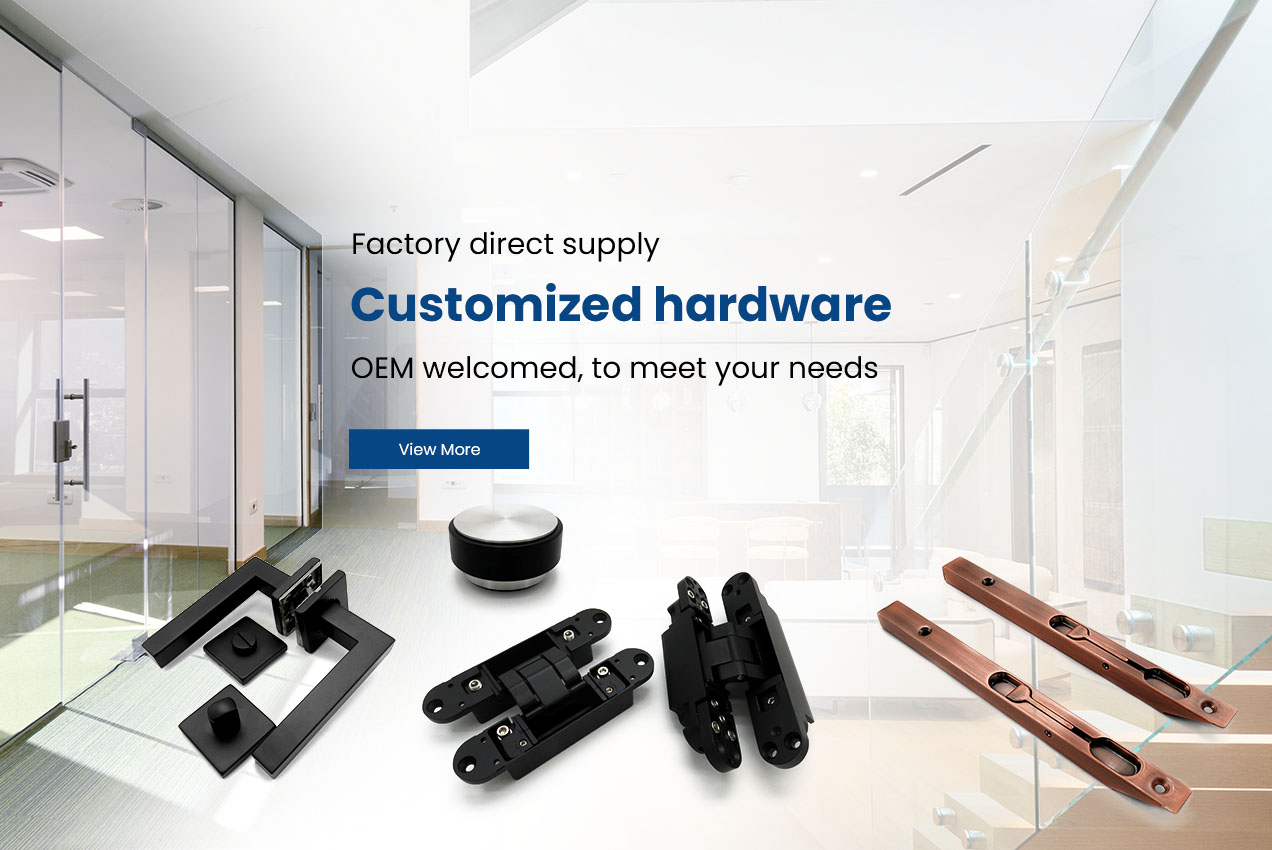
A capable supplier should be able to support more than a sample order. For large developments, teams usually need finish matching, coordinated production across several hardware categories, packing by area or room type, and stable lead times over multiple batches. On its official website, YAKO presents itself as an architectural hardware manufacturer established in 2003, with a 6,000 square meter facility, 10 production lines, and nearly 200 workers. The company’s range covers handles, hinges, locks, sliding door accessories, Bathroom And Glass Hardware, Stairs Hardware, and more, which helps buyers reduce fragmentation when managing one construction supply chain across multiple hardware points.
This matters in project procurement because supplier consolidation often improves finish consistency, communication speed, and delivery control. It also reduces the hidden cost of managing multiple small vendors during a busy schedule.
A reliable supplier should be comfortable discussing details, not just prices. That is the real value of a project door hardware supplier checklist. At minimum, buyers should confirm the points below.
| Key point | Why it matters |
|---|---|
| Usage zone mapping | Prevents under-specification in high-traffic doors |
| Fire and accessibility review | Reduces approval risk and site correction |
| Material and finish confirmation | Improves durability and visual consistency |
| Packing logic by opening or area | Speeds site distribution and installation |
| Spare parts plan | Lowers maintenance disruption after handover |
| Batch lead time visibility | Supports phased installation and bulk supply planning |
For complex developments, it is also wise to ask for finish samples, technical drawings, door schedule matching, and confirmation of which items are standard and which are custom. Good sourcing is not only about buying hardware. It is about reducing uncertainty before it reaches the jobsite.
YAKO’s product structure is useful for buyers who need coordinated architectural hardware from one manufacturer. The website shows a broad category system that includes lever handles, pull handles, window handles, hinges, locks, and related accessories, with CE-certified options highlighted in several product sections. That breadth is valuable when the goal is to standardize appearance across multiple openings while keeping procurement more manageable. For teams comparing suppliers, this creates a clearer path for specification alignment, finish coordination, and staged delivery.
Successful sourcing for large developments depends on more than finding attractive hardware at a workable price. The better approach is to review compliance, material suitability, supplier capacity, finish consistency, packaging logic, and after-sales replacement planning as one package. That is the difference between simple purchasing and disciplined door hardware sourcing. With its long manufacturing background, broad architectural hardware range, and production capacity, YAKO offers a practical base for buyers who need dependable support from sampling to volume supply. Share your door schedule or hardware list with YAKO, and the next sourcing discussion can start from real project needs instead of guesswork.