info@yako-hw.com
+86-13380989888
0750-3278683





Reliable door movement depends heavily on the Hinge. A Handle may be the part users notice first, but the hinge carries the door weight every day, controls the swing path, and helps maintain the gap between door leaf and frame. When a hinge is poorly selected, the result may include sagging, noise, loose screws, uneven closing, surface rust, and repeated maintenance.
For commercial buildings, apartments, hotels, public washrooms, kitchens, service rooms, and entrance doors, a durable door hinge should be judged by structure, material, load capacity, cycle performance, corrosion resistance, and installation accuracy. A strong-looking hinge is not always a long-lasting hinge. Real durability comes from controlled engineering details.
Selection should begin with the door itself. Door height, width, thickness, core material, usage frequency, and opening angle all affect hinge performance. A light interior wooden door does not create the same pressure as a heavy metal door or high-frequency commercial entrance.
When the hinge is too thin or too small for the door weight, the stress is concentrated on the knuckle, pin, screw holes, and leaf plates. Over time, this can cause deformation or misalignment. For heavier doors, heavy duty hinges with thicker plates, stronger pins, and better screw holding strength are usually more suitable.
The Builders Hardware Manufacturers Association states that ANSI/BHMA A156.1 Grade 1 hinges must pass 2.5 million opening and closing cycles on a door of specified weight. The same standard also defines metal gauge requirements according to hinge height, weight, and grade.
Hinge durability is strongly connected to structure. The hinge leaf should remain flat, the knuckle should align properly, the pin should rotate smoothly, and the gap between moving parts should be controlled. If the machining accuracy is poor, the hinge may create friction, noise, or uneven loading after installation.
A stable hinge normally has:
Smooth knuckle rotation
Accurate screw hole positioning
Strong pin connection
Consistent plate thickness
Clean edge finishing
Proper load distribution
YAKO focuses on these practical manufacturing details because hinge failure often begins from small dimensional problems. When hole positions are inconsistent or the hinge plate is slightly twisted, installers may need extra adjustment, and the door may not move smoothly after repeated use.
Material is one of the most important reasons why some hinges last longer than others. Stainless steel, steel, brass, zinc alloy, and other materials can be used in different hardware categories, but the operating environment should guide the choice.
Stainless steel contains at least 10.5 percent chromium, which helps form a protective passive film on the surface and gives the material its corrosion resistance. World Stainless explains that chromium is the key element shared by stainless steels for corrosion resistance.
For humid rooms, coastal buildings, kitchens, bathroom areas, and frequently cleaned spaces, a Stainless Steel Hinge can provide better resistance to rust and surface damage. This helps the hinge keep both function and appearance for a longer time.
A hinge may look strong when new, but long-term use depends on repeated opening and closing. This is why cycle testing is valuable. It helps evaluate whether the hinge can continue operating under repeated movement without serious deformation, looseness, or failure.
European EN 1935 is used for single-axis hinges and classifies hinges by several factors, including category of use, durability, door mass, fire door suitability, safety, corrosion resistance, security, and hinge grade. Guidance on EN 1935 shows that hinge durability can include 10,000, 25,000, or 200,000 test cycles depending on the classification.
For buyers comparing long life hinges, test data is more reliable than appearance alone. A hinge that has been designed for repeated use can reduce maintenance pressure in high-traffic buildings.
Rust can affect hinge rotation, screw stability, and door alignment. In moisture-heavy environments, corrosion may appear around screw holes, edges, knuckles, or pin areas first. Once corrosion develops, movement may become rough, and replacement may be needed earlier than expected.
This is why long lasting door hinges should be evaluated together with finish quality and corrosion resistance. A suitable hinge should match the building environment. For indoor dry areas, a standard finish may be enough. For bathrooms, kitchens, exterior entrances, or coastal projects, stronger corrosion resistance is more important.
YAKO supports hinge selection according to the application environment, helping customers choose suitable materials and finishes instead of relying only on one standard model for every door.
Even a well-made hinge can perform poorly if installation details are wrong. Door weight should be distributed correctly across the number of hinges. Screw depth, frame strength, hinge spacing, and door alignment all influence long-term performance.
For large orders, clear drawings and consistent production dimensions are essential. YAKO helps control hinge dimensions, hole positions, surface finish, packing labels, and accessory matching so installation teams can work more efficiently. This is especially important for hotel, apartment, school, hospital, and office projects where many doors are installed in sequence.
Before confirming bulk production, buyers should check more than price and finish color. The following points are useful for technical comparison:
| Evaluation Item | What To Check | Why It Matters |
|---|---|---|
| Door weight | Door height, width, material, and thickness | Prevents hinge overload |
| Plate thickness | Actual gauge and flatness | Improves strength and stability |
| Pin structure | Rotation smoothness and connection strength | Reduces noise and looseness |
| Material | Stainless steel or other suitable material | Matches corrosion and strength needs |
| Surface treatment | Finish consistency and edge protection | Supports appearance and rust resistance |
| Test standard | Cycle test or corrosion test reference | Confirms long-term performance |
| Packaging | Scratch protection and model separation | Reduces transport damage |
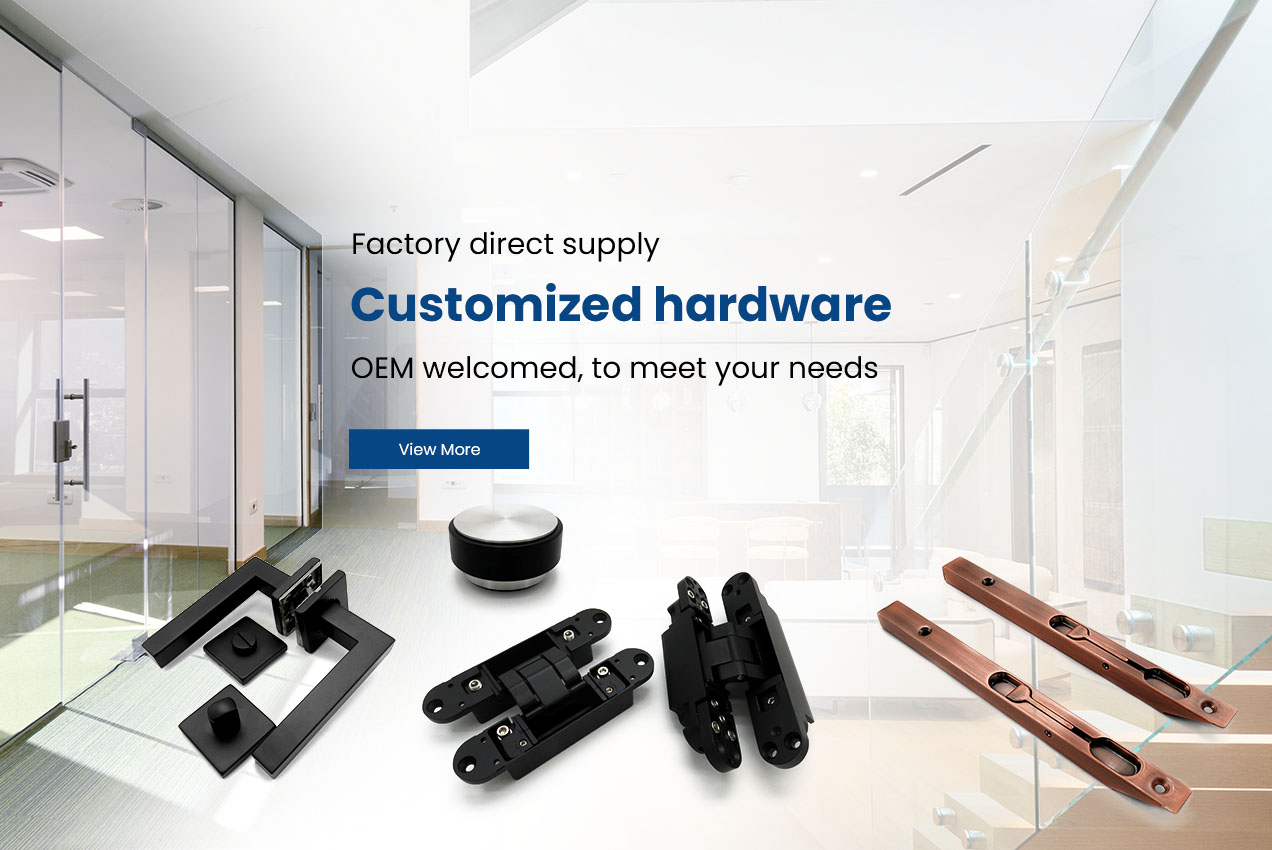
YAKO provides door hinges, handles, locks, pull handles, stoppers, and related architectural hardware accessories. This product range allows buyers to coordinate hinge selection with the full door hardware set, improving finish consistency and installation compatibility.
For durable hinges for doors, YAKO pays attention to material selection, plate forming, hole accuracy, surface finishing, and export packaging. These details help reduce common project issues such as hinge noise, loose installation, mismatched finish, carton damage, and repeated after-sales replacement.
A durable hinge is not defined by one single feature. It is the result of correct door weight matching, suitable material, stable structure, reliable cycle performance, corrosion resistance, precise installation dimensions, and responsible manufacturing control.
Long-term hinge performance protects the door system, improves user experience, and reduces maintenance cost after installation. YAKO supports this goal with practical manufacturing capability, matched hardware solutions, and specification control from sample review to bulk delivery.